Why Muscle is the Ultimate Healthcare Currency with Dr. Andy Galpin
By Michael Dorausch, D.C.
The atmosphere at the 2026 Parker Seminars Friday Night Keynote was different from the stereotypical Las Vegas experience. While Dr. Galpin opened with a joke about jello shots under the chairs to poke fun at the city’s “vice” reputation, the actual “intoxicant” of the evening was high-level performance science. For an audience of health and wellness professionals, the message was clear: in a city known for gambling with one’s health, building high-quality muscle is the best bet in town.
Like I did with Dr. Rhonda’s Keynote post, I took many notes and I am sharing some of what I have here. It’s of great value to chiropractors and is also great conversation to be had with your patients. Follow Dr. Galpin on X.

The Science of “Whole Muscle to Gene”
Dr. Galpin’s career has been defined by a “whole muscle to gene” approach, utilizing thousands of muscle biopsies to study human performance at the molecular level. By examining individual muscle fibers (which btw are visible to the naked eye) his lab maps out how DNA tells tissue to grow, repair, or shrink.
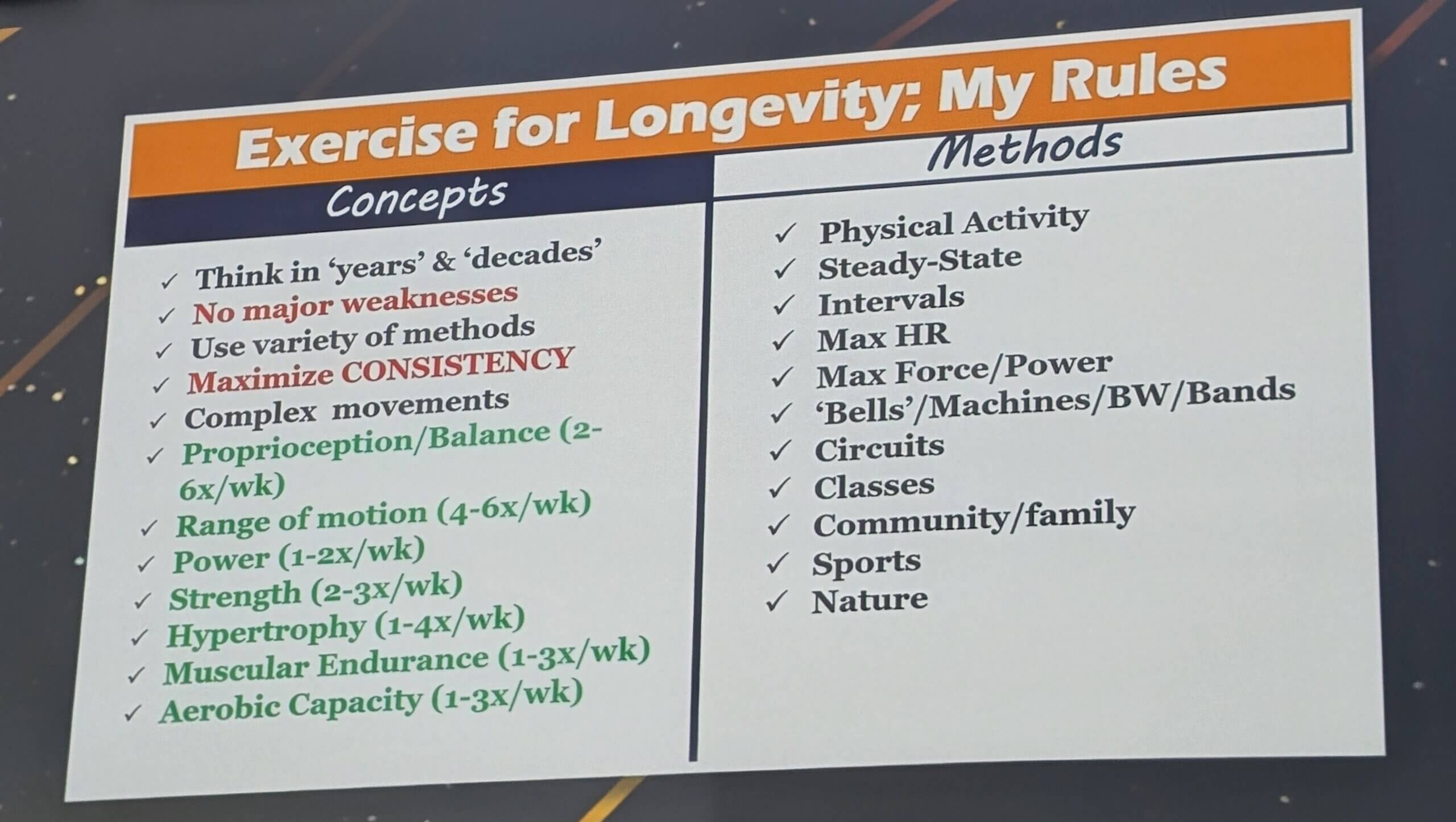
His core finding? Whether you are a world-class athlete or someone simply looking to live longer, the quality of your muscle dictates your health trajectory. If you have healthy muscle, you have a shot at being healthy; if you don’t, you’re in trouble.
The Metabolic Powerhouse
Muscle is much more than a tool for movement; it is a primary driver of metabolic health:
- Metabolic Rate: Roughly 80% of your resting metabolic rate is predicted by your lean muscle mass.
- The “Passive” Burn: Every pound of muscle burns approximately five extra calories per day at rest.
- Fat Loss: Adding just three to four pounds of muscle can result in burning a couple of extra pounds of fat per month, which can scale to 20 pounds over a year without other changes.
- Anti-Diabetic Effects: Research shows muscle hypertrophy (growth) is a “clinically meaningful anti-diabetic” tool. A 2% gain in muscle can improve fasting blood glucose by 6%.
The Direct Connection to Brain Health
One of the most significant shifts in recent research is the move from correlation to causation regarding muscle and the brain.
- Myokines: During exercise, muscles release “myokines” – chemicals that directly activate health-promoting pathways in the brain.
- Cognitive Decline: There is a proven molecular connection between muscle loss (sarcopenia), blood glucose issues (diabetes), and cognitive decline.
- Strength and IQ: While muscle mass predicted only about 0.5% of IQ in national databases, muscle strength predicted 5% of cognitive function.
Symmetry, Quality, and Function
Dr. Galpin outlined four ways to assess muscle: size, symmetry, quality, and functionality.
- The Symmetry Myth: Humans are naturally asymmetrical (e.g., most are right-handed), and perfect symmetry is not always the goal.
- The 10% Rule: Generally, a “10% rule” applies to hand dominance, but significant imbalances in force production between limbs are problematic and increase injury risk.
- Diagnostic Tools: Simple tests like hand-grip symmetry can predict future fall risks. For a more comprehensive look, DEXA scans are recommended to measure lean body mass and identify limb imbalances.
Conclusion: Muscle as Longevity
The takeaway for the chiropractic community and health practitioners is that muscle is the ultimate “longevity organ”. It protects against metabolic disease, boosts cognitive health, and ensures “strength-span” as we age. As Dr. Galpin concluded, “more muscle you have, the longer you live”.